Stone Money – cfalover

Complexity of Money

Money is a complex concept to many, but to me, it is almost like a belief or even a religion. If people didn’t believe in money, it most likely wouldn’t exist. Before reading further on the invention of money, I believed money to be a tangible item that shows how much you are worth. When I first began to listen to the podcast about the story of “Stone Money”, it seemed bizarre to me. I had heard of currency similar to ours in other stories, but this was different. The NPR podcast called “The Invention of Money” gave me a slight background on the story of these people using stone as their money, which in all honesty, made me question the logic on this. According to Milton Friedman’s paper, the people on the island of Yap had used large thick stone wheels as their currency in the early 1900s, and they called it fei (Friedman). As I continued to analyze this information, it became clear to me that our money system in the United States is actually very similar to the system on the island of Yap.

Friedman’s article described how the German government decided to write on the fei that it was theirs when they purchased the islands. If they can’t move the currency or have it “on them” at all times, what is it worth? The value is based on what the Yaps see it as. The same event happened with the French and our Federal Reserve Bank. The French kept the gold in our reserve with labeled drawer with their name, but it wasn’t even helping them by having it in our bank. In these situations, the governments did this so that the people saw that this money was theirs; it was a form of showing power and dominance over the people. It wasn’t about the value of the money or how much money they had, it was just to establish power.

Yap’s money was definitely more abstract than our money in America is. Using large, bulky stone wheels as currency (since they were impossible to move), forced the people of Yap to create a system to know which wheels are whose. Many people on the island just knew that one wheel belonged to John, etc. If John were to purchase or trade something though to someone named Jane, then the town would know that stone as Jane’s now. In America, this type of system would make people, I think, very insecure because others can know how much money you have, and in America, that is a very touchy subject that people rightfully don’t share. Our use of these green, flimsy paper bills are not much better though. The people of Yap can’t exactly have their money become lost, destroyed, or stolen very easily. In America, our bills are not worth very much at all. Reading these stories really made me realize this. Our money can get ripped, stolen, or lost so easily since it is just small paper and coins. Not a lot of people would even realize your money is gone if you didn’t announce it. In Yap though, if your wheel was missing, everyone would know. The people of Yap, I believe, would consider how small and easily moveable our currency is extremely bizarre. They would most likely not understand how our money can be so fluid and easily exchangeable. Maybe in America, we need to create a new, abstract currency just like the island of Yap did.

Bitcoin is another popular currency in the world today that is another type of currency to look at to compare to our money and Yap’s money. Bitcoin is a very abstract take on currency, and I specifically did not know much about cryptocurrency myself besides the fact that it was becoming very popular over the last few years. The article from Market Watch gives a quick insight on what bitcoin is and why it isn’t as trustful as people believe. Jeff Reeves goes in to talk about how this cryptocurrency honestly lacks a true value because it doesn’t have a central bank like we have in real life. If we need to take out 100 dollars, we go to the bank, and withdrawal that money in cash from our account. In bitcoin, it doesn’t work that way. Its worth has also plummeted by a great value over the past years as well. It is basically now just worth whatever a person is paying for it. Since it has gone through so many peeks and declines, it isn’t very trustworthy and, according to Reeves, isn’t something people in today’s world should bother investing in. Compared to the stone wheel and our paper money, this is the most “unreal” of it all.

One important aspect in any country should be that the people need to have faith in the value of their currency. Like said prior, money is almost like a religion. People love to have the shared credence that money is incredibly valuable. In the past generations, like those on Yap island, everyone knew which stone belonged to who, and how much each person had. I don’t believe they were worried about the reliability of their currency though, considering natural disasters or other events could end up destroying everything they have. In today’s world, you need reliable money to be able to have a house, pay for food for your family, and to pay the bills. People need to feel secure and safe about their currency in order to pay for important aspects like these. Without this trust, no one would want to pay for important things with their money (like insurance, house payments, etc). Trust in their currency means a stable population and economy.

Money is something that is very much valued, especially in today’s world. In reality though, our money is just a green, flimsy paper with a number on it or a coin with a number on it. The people don’t seem to care too much about the actual physical worth of the money, but everyone believes it is valuable because it can determine your worth in some ways, as well as your successes and happiness.

References

Friedman, Milton. “The Island of Stone Money.” Diss. Hoover Institution, Stanford University , 1991.

“The Invention of Stone Money.” 423: The Invention of Stone Money. This Is American Life, WBEZ. Chicago . 7 Jan. 2011.

Reeves, J. (2015). Opinion – bitcoin has no place in your- or any – portfolio. Retrieved from https://www.marketwatch.com/story/bitcoin-has-no-place-in-any-portfolio-2015-01-28

Posted in Stone Money | 1 Comment

Stone Money-levixvice

Money Oddities

Currency hasn’t changed much in its purpose for people to buy services and goods or sell their own goods for exchange in cash by hand or credit/debit card only. Appearances of currency have changed throughout the years from using minerals; such as in Milton Friedman’s The Island of Stone Money where the small island of Yap had used large coin-like structures by the height of one to twenty feet made out of limestone called fei. Their own currency was first used to pay important events or for provisions of livestock as the people would do early transactions with their limestone discs. Their money was also very much more as ownership through trading with others. In Yap tradition, one’s money would still be valuable even on the bottom of the ocean, even to this today may still be a part of their family’s possessions, “the fei was of magnificent proportions and of extraordinary quality.” Silver and gold was primarily used in many countries from ancient times like in Mesopotamia and Israel in the middle east called shekels. It can also be said that the modern era uses paper money like Europe and Asia that have different values of how much the paper money is than the rest of the paper money outside each country. So this currency can be stored or collected in banks nationwide within their bank accounts. Nowadays cryptocurrency which uses bitcoins in order for the exchanges for services and goods through digital purchase or transactions on the web. Money has revolutionized the national government to create their own currency to have value for citizens while organizing the currency by lowest to highest value. 

But in some countries; money has been disdained due to the inflation and deflation problems that cause prices of such goods and services to undergo higher or lower prices by the treasury’s choice to lower the value of money into nothing more than just useless paper in the economic world. Brazil was one of those countries that experienced inflation contributing to the fall in value of money which had harmed the government and its people into shambles. But Chana Joffe-Walt, who wrote “How Fake Money Saved Brazil” said that only four individuals with Bacha being one of them were able to quell the people’s distrust of the useless money with a trick. That is making them believe worthless money had value once more through a fictitious government policy. Prices were changing all the time going higher and higher which was the government’s own fault for not coming up with solutions for this crisis. The inflation was solved by using the Unit of Real Value currency that in hindsight has nothing in value. But every store and service prices were categorized for URVs only rather than using cruzeiros. It works to the extent of a psychological experiment to have people gain trust through a placebo to test if it can work naturally. The people wouldn’t believe the “prices to always go up.” Afterwards, The treasury and Bacha’s team replaced the URV currency with virtual currency for the better economy.

Another country in 2009 had its own currency becoming not worthless to the eyes of the public, but actually the money was scarce for anyone trying to get the money from the bank. Japan being one of the advanced countries in the world has no money being printed out all due to the crippling debt, which any country would be fearful of paying their debts would cause businesses and goods to have interest rates going higher than ever. However, in Paul Krugman’s “The Curious Case of Japan’s Economic Stimulus”  prescribed how Prime Minister of Japan Shinzo Abe having no common knowledge of economics was able to get Japan out of debt in 2009 by not following “Austrian orthodoxy” and have the treasury to print out 10.3 trillion yen as an emergency stimulus. This caused the interest rates to stabilize while yen prices have been lowered, “which is a very good thing for Japan.” These two countries were able to rise again from their economic crisis through policy plans to manipulate the currency to stop inflation/deflation of debt without causing more mistakes in the process.

In the economic world; no other institution in America has any power over currency and finance than the federal reserve that plans out the actions for how currency would be printed out or not in terms of the economic status. During the Great Depression; as the stock market crashed, the deflation rates were greater than the scarcity of money as well for the prices dropped, if the federal reserve would’ve helped the great depression by inflating the sums of money and treasury bonds to people to buy them for money to be made from banks during the preparation of World War II. But this sort of action of printing money doesn’t always help the economy. As Alex Blumberg and David Kestenbaums’ “Weekends at Bernanke’s” states that “it is a balancing act, with the fate of the US economy hinging on the Fed’s decision. Not that anyone there acts that way.” This act could lead to inflation, making the value of money worthless just like how it was in Brazil’s Cruzeros became useless. In 2007, there was also a financial crisis for both the “ banks and firms up and down…all these assets that were plunging in value.” The Federal reserve would have gone for their “last resort” to open one trillion dollars rather than sorting everything out within six weeks.

Money creates the means for the economy to bloom for businesses and goods that people want and need without the use of bartering or trading to be in use rather than wanting the item that both parties can be satisfied with. As for it’s consequences of the collective debt, deflation, and inflation is to be checked and balanced by whether policy necessary to fix the economic value of money and having people believe in the value once more.

References

The invention of money. This American Life. (2018, February 19). Retrieved September 29, 2021, from https://www.thisamericanlife.org/423/the-invention-of-money.

Joffe-Walt, C. (2010, October 4). How fake money saved Brazil. NPR. Retrieved September 29, 2021, from https://www.npr.org/sections/money/2010/10/04/130329523/how-fake-money-saved-brazil.

Krugman, P., author…, P. K. M. by this, & Fang, L. (2013, January 22). The curious case of japan’s economic stimulus. Truthout. Retrieved September 29, 2021, from https://truthout.org/articles/the-curious-case-of-japans-economic-stimulus/. 

Friedman, M. (1991, February 1). The island of Stone Money. Collected Works of Milton Friedman – Collected Works of Milton Friedman. Retrieved September 29, 2021, from https://miltonfriedman.hoover.org/objects/56723/the-island-of-stone-money. 

Posted in Stone Money | 3 Comments

Stone Money-Frogs02

Money is a Scam

Money is manipulation. It is a scam. It is fiction. It is not solid and can disappear. It is a belief system. The value of money a year from now can change drastically from the present time even if it is the same amount of money. “Money works this way because we’re a complicated, industrial society with banks and stock markets and financial instruments of all kinds.” Money is information. Money is that set of shared beliefs that is a fiction completely fallen apart. Everyone stopped believing in their currency and of course, that had disastrous results. No money changed hands, no money vanished. 

In NPR’s podcast, This American Life, Kestenbaum’s story highlighted the main point that money is fiction. For example, money is deposited into the bank, it can be loaned out to some guy who wants to open a shoe shining store down the street. So, that is your cash he is holding. The bank that your checking and savings are in is also a bank. The Planet Money team said that this is how the Brazilian economy works. Brazil’s economy struggled with brutal inflation rates that were eventually resolved by four men who creatively “tricked” the people of Brazil into “buying into” a new currency. The fictional quality of money is inherent in the very idea of money. The fictional money can be recognized on an island called Yap in the South Pacific. The currency the people use on the island were unsuitable and counter-intuitive. The people of Yap’s belief in these large stone objects (their currency) is what inherently gave them their value. We are not much different from the YAP. We praise our money that isn’t really considered our money. Brazil’s money each year is worth less and less than before. Is our money true to us if the value is going down and it is being loaned to people other than ourselves? 

In “The Island of Stone Money,” Milton Friedman states that as Yap’s “island yields no metal, they have had recourse to stone; stone, on which labor in fetching and fashioning has been expended, is as truly a representation of labor as the mined and minted coins of civilization.” The stone is equivalent to money. Their exchange is called fei. It consists of large, solid, thick, stone wheels, ranging in diameter. The stone they are talking about was their coins. They were brought up by some native navigators in canoes and rafts. Just like the money in the NPR podcast was fiction, this “stone” is also fiction. It is a bargain. It, “involves the price of a fei too large to be conveniently moved, its new owner is quite content to accept the bare acknowledgment of ownership and without so much as a mark to indicate the exchange, the coin remains undisturbed on the former owner’s premises.” Ownership was only recognized through trade. The only thing that sealed the deal was a verbal agreement. An ancestor of the family lost their remarkably large and exceedingly valuable fei at the bottom of the sea. Everyone testified that the fei was of extraordinary quality, and the loss of this stone was no fault of the owner. “Our own money, the money we have grown up with, the system under which it is controlled, these appear “real” and “rational” to us. The money of other countries often seems to us like paper or worthless metal, even when the purchasing power of individual units is high.”

I have grown up learning that money is worked for and it is not just given out to anyone. I have learned that having money is a responsibility. Gaining money is a responsibility. My parents made me start babysitting and get a big girl job at the age of 15 because they wanted me to learn how to rely on myself rather than having to keep begging them for 5 dollars to go get a pizza and a coke. Although my parents made me work for my money, some other parents are not like that. These kids either steal money from their parents or beg them for money until they have no other choice. Money is a scam. This is a continuous theme in all of these articles mentioned so far. Money and objects are scammed for more money or objects that are scammed to get even more money. I view money as manipulation. For example, I will give you 5 dollars for a unique card (the person doesn’t know that this unique card is going for 200 dollars), so they trade. Now one person is “up” 5 dollars, while the other is up 195 dollars. This is a scam and manipulation. 

“Bitcoin is a decentralized digital currency, without a central bank or single administrator, that can be sent from user to user on the peer-to-peer bitcoin network without the need for intermediaries.” Bitcoin is believed that as the value grows, and the infrastructure around it also grows, the price relative to other currencies will be more stable. Bitcoins are stored on a user’s hard drive in a virtual wallet, and can be sent directly to another person, bypassing banks and remaining largely anonymous. Bitcoin is virtual money. It can not be determined whether it will drop or not. The prediction of inflation will not be known. Bitcoin can be scammed and can try to sell you with a fake digital wallet. If someone sets you up with a fake wallet and tries to sell a bitcoin, it could be a fake bitcoin and you lose a lot of money. “The Winklevoss brothers, known in part for accusing Facebook founder Mark Zuckerberg of having stolen the idea for the social network from them. On Thursday, they told The New York Times that they had bought $11 million worth of Bitcoins — that value assessed before the crash — praising it as a mathematical system “free of politics and human error.””

Overall, money is a scam. Most people would do anything for some money. There are places on the internet that people buy products off of. They never get their products. The website takes their card information and buys stuff with that information. Not only are the buyers not getting the product they paid for, they are losing money left and right on their cards. Money can be gained from manipulation. If you don’t tell me where your money is hidden, I will tell everyone your deepest secret. You are gonna give them the money. Right? Money is viewed as a scam. 

References 

Friedman, M. (n.d.). 1991 island STONE money – Hoover Institution. Retrieved September 29, 2021, from https://miltonfriedman.hoover.org/internal/media/dispatcher/215061/full. 

Renaut, A. (n.d.). The bubble bursts on e-currency bitcoin. Yahoo! News. Retrieved September 29, 2021, from https://sg.news.yahoo.com/bubble-bursts-e-currency-bitcoin-064913387–finance.html?guccounter=1. 

The Invention of Money – This American Life. (2018, February 19). This American Life. https://www.thisamericanlife.org/423/the-invention-of-money

Posted in Stone Money | 2 Comments

Claims Task

Basic Claim Types

We’ve hardly spoken about claims (and claim types) at all in class, so I don’t expect you to readily recognize a Definition/Categorical claim, but one thing should be obvious from the name. It’s a claim about how a term is defined or what category of thing it belongs to. We can start there. Here are some claim types.

1. Definition Claim. When you say “PTSD is a psychological disorder,” in your first five words you’re making a definition claim.
2. Analogy Claim. When you say, “PTSD is similar to other communicable diseases because it can be spread by a victim to others with whom he interacts,” you’re claiming a similarity of one thing to another.
3. Categorical Claim. A simple categorical claim would be the naming of several examples of PTSD symptoms (hyperawareness, sleeplessness, quick anger). They all belong to the category: Symptoms of PTSD. Similarly, if you claimed, “PTSD is not only a psychological disorder but also one that can be spread to others through close contact,” you could be making a categorical claim of the sort: PTSD belongs to the category of ailments that can be spread or communicable ailments.
4. Factual Claim. A claim that circumstances or conditions exist beyond doubt. Factual claims can be proved by appealing to indisputable evidence. “Ten thousand veterans of the Iraq war have been diagnosed with PTSD” can be quantified and proved. However, “Ten thousand veterans of the Iraq war SUFFER FROM PTSD” is not indisputable since it depends on a clear definition, accurate diagnosis, and an absence of fraud or error.
5. Evaluative Claim. A claim that involves judgment of the characteristics of an item or situation. Evaluations are arguable and can be supported by expertise, authority, credentials, or a preponderance of evidence. They can evaluate the quality of an item, its suitability for a particular purpose, or the effectiveness of a course of action. “Family members of veterans suffering from PTSD are not getting adequate support to deal with their own traumas” is an evaluative claim.
6. Ethical or Moral Claim. A type of evaluative claim that places a judgment on a social situation expresses an ethical or moral judgment. “Family members are not getting the support THEY DESERVE” is an ethical claim that blames the Veterans Administration for a failure to support the veteran’s family.
7. Quantitative or Numerical Claim. Such claims may be factual or evaluative depending on the reliability of the measurements. To say “There are more returning veterans with PTSD now than ever before in the history of warfare” is to make an evaluative numerical claim (it also compares this day with all previous days and is therefore comparative).
8. Comparative Claim. As hinted above, any claim that two or more things can be ranked involves a comparative claim. “Best” and “worst” involve comparisons, as do “most” and “least” and all the flavors of categorizing by quantity or quality.
9. Causal Claim. Causal claims are assertions of cause and effect, consequences, preconditions, or predictions of what will occur in certain circumstances. An example of a causal claim you’ll likely encounter is that PTSD develops as a result of sustained trauma. The claim is that “Trauma causes PTSD.”
10. Recommendation or Proposal Claim. Authors who write to convince an audience to adopt a course of action (or at the very least to adopt a different point of view on a topic of social importance) are making a proposal claim. The word “should,” or “must,” or “demand” almost always appears in a proposal argument (and also in Ethical claims).
11. Attributive Claim. Authors don’t or can’t verify every claim they make, so, to signal that they are passing along someone else’s claim, they distance themselves by an arms-length with a phrase like, “according to,” or “says X,” or “It is said.”
12. Illustrative Claim. Some claims use the methods of poetry to draw similarities or to illustrate situations. They describe people in ways that evoke sympathy. They compare homes to tombs. They detail the endless paperwork needed to get a simple prescription to illustrate the frustration of medication-seekers.
13. Credibility Claim. A special type of Evaluative Claim is the Credibility Claim, which names the credentials of the person responsible for the claim, as in: “Harvard professor of Film Ethan Coen reviewed the new thriller.” It’s Factual that Ethan Coen reviewed the film. It’s a Credibility Claim to identify him by his line of work.

Similarity of Category and Analogy

Calling PTSD “contagious” also seems like an analogy, doesn’t it? Colds and flus are likely contagious. Measles is; polio is. The Corona viruses are. But if we say a yawn is contagious, or that enthusiasm is contagious, we’re making an analogy to suggest, poetically, that a yawn belongs to the category: contagious things (things that can be transmitted from one person to others like a virus).

Yawning isn’t spread through bacteria or viruses, so it isn’t literally contagious. Neither is enthusiasm. But it spreads similarly to diseases: one person in close proximity to others transfers a condition: a physical yawn or a purposeful emotional energy to a roomful of other people, for example.

So what do you think? Is PTSD transferred from one person to another? If so, is the process more like spreading the flu, or more like spreading enthusiasm? Or a third way you could explain in a different analogy?

Did Brannan “catch” Caleb’s PTSD? Or is hers an entirely new case?

Student Sample

A student in last semester’s class did a creditable job of informally analyzing claims from the source material and categorizing the claims as types from the list above. It’s not perfect, but it’s a good model of the sort of analysis this assignment requires, a strong sample of a smart student making good observations.

It’s also nicely formatted with block quotes and boldface for the category types.

BEGIN THE ONE HOUR EXERCISE

Imagine there’s a murderer in your house. And it is dark outside, and the electricity is out. Imagine your nervous system spiking, readying you as you feel your way along the walls, the sensitivity of your hearing, the tautness in your muscles, the alertness shooting around inside your skull. And then imagine feeling like that all the time.

—This whole section is a long analogy claim, or it could be called a categorical claim.  The author lists the symptoms of PTSD that Caleb Vines faces because of his mental illness.  Besides just listing his symptoms, the author compares his symptoms to the nervous and scared feelings one would get at a murder house, which is what makes it an analogy.

He’s one of 103,200, or 228,875, or 336,000 Americans who served in Iraq or Afghanistan and came back with PTSD, depending on whom you ask, and one of 115,000 to 456,000 with traumatic brain injury.

—The author uses a numerical claims when he mentions the number of soldiers who came back with PTSD and TBI, who served in Iraq or Afghanistan. Obviously, she is citing the claims of others here, all of whom make different counts.

—When the author states “depending on who you ask,” it means that the definition of TBI is not exact and doctors may have different diagnoses for it. So the difference in numerical claims highlights the problem of a vague definition. She doesn’t evaluate which numbers are the “best,” so it’s not evaluative.

Even doctors can’t say for sure exactly why he has flashbacks, why he could be standing in a bookstore when all of a sudden he’s sure he’s in Ramadi, the pictures in his brain disorienting him among the stacks, which could turn from stacks to rows of rooftops that need to be scanned for snipers.

—This quote is a causal claim.  Even though the quote states that the doctors don’t know the exact reason for these flashbacks, we do know that the cause is this mental illness called PTSD.

The divorce rate was twice as high for vets with PTSD as for those without. Vietnam vets with severe PTSD are 69 percent more likely to have their marriages fail than other vets.

—These two sentences contain factualcausal, and evaluative claims.  The facts as presented depend on who defines PTSD, and what qualifies as “severe PTSD” is evaluative. PTSD is said to cause divorce, which is obviously a causal claim.

The VA also endorses eye movement desensitization and reprocessing therapy (EMDR), which is based on the theory that memories of traumatic events are, in effect, improperly stored, and tries to refile them by discussing those memories while providing visual or auditory stimulus.

—This quote is a definition and factual claim.  The author mentions (EMDR) and follows it with a factual definition of what the therapy is. Therapists using EMDR are depending on a theoretical claim that the therapy relieves trauma.

Of the soldiers coming home with PTSD now, he says, “You need time. You need time, and perspective.”

—The use of the word “need” makes this a proposal claim that soldiers returning with PTSD need time and perspective.

END OF ONE HOUR

ASSIGNMENT DETAILS

  • Budget two hours for this assignment between now and Wednesday midnight. You’ll need one hour to read the article or listen to the podcast, one hour to write your Claims analysis.
  • Find the entire text of the article (separated into 22 sections, one of which has been assigned to YOU) at THIS LINK.
  • DUE THU FEB 16 (11:59PM WED FEB 15).
  • Publish your assignment in two categories: PTSD Claims and the category for your username found under Authors.
  • Give your post the title Claims–Username, substituting your own username, of course.
  • Word count is irrelevant, but thorough analyses of whatever length will be graded higher than superficial writing that wastes words. Complex ideas briefly expressed are rewarded best.
  • Give yourself a One Hour Time Limit to Write about the Author’s Claims.
  • Customary late penalties. (0-24 hours 10%) (24-48 hours 20%) (48+ hours, 0 grade)
  • Minor (Non-Portfolio) Assignment (10%)
Posted in PTSD Claims | Leave a comment

Stone Money- strawberryfields4

The Religion of Money

Money is a belief system, not unlike that of a religion, that is only able to maintain its unrelenting grip on society if the everlasting faith that people have in it persists. If the value of money ceased to be recognized, then the value of money would cease to exist. This should not be confused with the necessity for a monetary system within a society, but solely the idea that it thrives on the support of its loyal “followers.” 

In his essay, “The Island of Stone Money,” Milton Friedman highlights the highly abstract method of currency used on the Island of Yap. In the early twentieth century, Germany obtained power over this small civilization. They quickly recognized the islanders’ obscure currency, called fei, which consisted of the exchange of incredibly large stone wheels, ranging in size from one to twelve feet. The truly baffling nature of this system was not the peculiar physical characteristics of the fei, but rather that ownership did not require actual possession. Ownership was acknowledged through trade, and a verbal agreement was sufficient. Friedman relayed a well-known legend about a family on the island whose immense wealth was recognized by all, despite the fact that their fortune was never seen by a soul. An ancestor of the family lost their “…remarkably large and exceedingly valuable…” fei at the bottom of the sea. This event had no impact on the amount of wealth the family possessed. Even generations later, and still laying on the floor of the ocean, the fei was still considered property of this family. In fact, when Germany wanted to impose fines for disobedience on the inhabitants of the island, they resorted to painting crosses on the wheels to identify that they had obtained ownership. Once the new government’s wishes were obeyed, the fines were returned to the islanders by simply removing the paint. The people of Yap’s belief in these large stone objects is what inherently gave them their value. This extraordinary example of the power of faith in something conceptual is similar to the blind faith that one might have in their religion.

In NPR’s podcast This American Life, the team from Planet Money discusses the unusual economic history of Brazil. For many decades, Brazil’s economy struggled with brutal inflation rates that were eventually resolved by four men who creatively “tricked” the people of Brazil into “buying into” a new currency. In order to accomplish this, they first created a virtual currency known as URVs. The value of a URV varied daily, however the general public was only aware of how they were able to spend each URV. This plan instilled a sense of comfort and consistency in their currency that they had lacked in the past. As a result, the public had a renewed faith in the stability of their economy. At that point, the government was able to create a new currency called the Brazilian real which was easily accepted by the public and substantially reduced the inflation rate. This brilliant plan heavily relied on the ability to create a strong belief in the value of the real. Without that belief system, this currency would have failed.

If nothing else, these early examples prove that the value of money is not dependent on a concrete object itself, but rather a concept of its worth. In more recent years, this same truth is apparent with the creation of Bitcoin. Anne Renaut explains that Bitcoin is a completely virtual form of currency; no one ever sees them, and there is never really a need to spend them. They function in a similar manner to stocks. Their success and worth rely on their users to maintain a belief in their value, as “…Bitcoin users can only cash out their money if other people want to buy their Bitcoins.” If a universal disbelief in Bitcoin occurred, they would no longer have worth.

Like many of us, I have grown up with a basic understanding of money that is a gross misconception. I have learned its value through earning allowance and babysitting throughout my childhood. My experiences have given me a concrete understanding of the value of a paper bill, however through my research, this understanding has been questioned. It has become clear that the quarter that I inserted in the gumball machine as a child had a value more abstract than I realized. The value of that quarter is not constant, but simply reliant on the idea that others also value that quarter. For example, in any basic high school history class, we learn about the fragile nature of concrete money which was evident after the U.S. Civil War. Following the North’s victory, the Confederate currency that had been implemented was suddenly worthless. Once again, this clearly demonstrates that money is an abstract concept, heavily dependent on a universal belief in its value.

Even the United States Federal Reserve recognized long ago the lack of necessity for physical representation of currency. The Planet Money team describes the now abandoned gold standard for the accountability of our country’s money. At one point, each dollar in circulation was represented by one dollar worth of gold housed at the Federal Reserve. Ultimately, they concluded that they did not need gold to correspond with the amount of money within the economy. The blind faith of the people of the United States enabled the Federal Reserve to be empowered with the ability to create money out of thin air, as they deemed necessary for the good of the economy. In an extreme scenario, they even created 1.25 trillion dollars to bail out the major financial organizations on Wall Street.

There is certainly not a lack of desire for money. Overall, our society equates obtaining large quantities of it with success and happiness. As children grow up, their parents indoctrinate them to the ideals and beliefs by which they themselves live their lives. Religion, ethics, and traditions may vary from family to family, however one constant exists across all families and cultures—the necessity and innate value of money. What we are never taught is why these paper bills and metal coins have this hold over society. It is not because of their physical worth, but rather the shared belief that they are eternally valuable, just like a faith in God.

References

Friedman, Milton. “The Island of Stone Money.” Diss. Hoover Institution, Stanford University , 1991.

Renaut, Anne . “The bubble bursts on e-currency Bitcoin.” Yahoo.com. 13 Apr. 2013. 30 Jan. 2015.  https://sg.news.yahoo.com/bubble-bursts-e-currency-bitcoin-064913387–finance.html/ 

“The Invention of Stone Money.” 423: The Invention of Stone Money. This Is American Life, WBEZ. Chicago . 7 Jan. 2011.

Posted in Stone Money | 1 Comment

My Hypothesis- Disneylover2002

  1. Autism
  2. Autism in children
  3. Catching autism in kids early on
  4. Catching autism in children at an early age will have good benefits 
  5. If doctors can detect autism in children while they are still very young, the child will not have as many disabilities 
  6. If doctors can detect autism in children while they are still very young, the doctors can prevent loss of verbal communication skills and other valuable skills that children with autism suffer from. 

Posted in My Hypothesis | 3 Comments

My Hypothesis-RowanAnnouncer

  1. aliens.
  2. aliens in America.
  3. alien sightings in America.
  4. aliens and the United States Government. 
  5. Pentagon declassifying credible documents of all sightings, research, and contact with aliens.
  6. The mysterious declassification of the Pentagon’s alien documents has everyone wondering whats inside, and how it’ll undoubtedly impact the world we live in.

Posted in My Hypothesis | 2 Comments

Barter Explained Poorly, 4 Times

Paragraph 1. Bartering is trading services or goods with another person when there is no money involved. This type of exchange was relied upon by early civilizations. There are even cultures within modern society who still rely on this type of exchange. Bartering has been around for a very long time, however, it’s not necessarily something that an economy or society has relied solely on.

Paragraph 2. A barter system is an old method of exchange. This system has been used for centuries and long before money was invented. People exchanged services and goods for other services and goods in return. In ancient times, this system involved people in the same area, however today bartering is global. The value of bartering items can be negotiated with the other party. Bartering doesn’t involve money which is one of the advantages. You can buy items by exchanging an item you have but no longer want or need. Generally, trading in this manner is done through Online auctions and swap markets.

Paragraph 3. The history of bartering dates all the way back to 6000 BC. Introduced by Mesopotamia tribes, bartering was adopted by Phoenicians. Phoenicians bartered goods to those located in various other cities across oceans. Babylonian’s also developed an improved bartering system. Goods were exchanged for food, tea, weapons, and spices. When money was invented, bartering did not end, it become more organized. Due to lack of money, bartering became popular in the 1930s during the Great Depression. It was used to obtain food and various other services. It was done through groups or between people who acted similar to banks. If any items were sold, the owner would receive credit and the buyer’s account would be debited.

Paragraph 4. Just as with most things, there are disadvantages and advantages of bartering. A complication of bartering is determining how trustworthy the person you are trading with is. The other person does not have any proof or certification that they are legitimate, and there is no consumer protection or warranties involved. This means that services and goods you are exchanging may be exchanged for poor or defective items. It may be a good idea to limit exchanges to family and friends in the beginning because good bartering requires skill and experience. At times, it is easy to think the item you desire is worth more than it actually is and underestimate the value of your own item.

 Informal Task

Informal Task

Improve one or more of these poor descriptions by adding Cows and Chips. Use the Reply field below to record your work.

Posted in Lectures | 1 Comment

Hypothesis Feedback

By THU OCT 07, all of you will have consulted with my on a plan to develop your Hypotheses to reveal the most intriguing research questions you can imagine.

You’re smart people and good students. You’re in class because you want to challenge yourself and learn to do something new, or differently, or better. So, here’s your chance. The “fallback topics” and themes you’ve written about in other classes aren’t as close to the top of the grade scale in this class as they may have been.

Let’s take far-fetched example of a way to turn an “obvious answer” into something more intriguing.

  • Last September, forest fires were raging through California, clearly fueled by environmental conditions worsened by the warming global climate, burning a million acres of timerberland incredibly quickly.
  • The president suggested that the cause of the devastation was the failure of the State of California to “sweep the forest floor” clear of leaves and fallen branches that, as he described it, “explode like matchsticks.”
  • Any sensible person who contemplates the prospect of sending crews into a million acres of forest with leaf blowers recognizes the president’s solution as the ravings of a madman.
  • But . . . what if there’s a point to this insanity?
  • What if, every mile or so (you name the distance), a broad band of woodland was clearcut and the ground kept clear, creating a line that a raging fire would not cross.
  • The condition of the forest floor for that mile (5 miles?) would be irrelevant.
  • Fires that used to rage for 5 miles and then keep going another 10, and another 10, would burn for 5 miles and then stop.

Do you see what I mean? Find your topic. Scan the prevailing opinions. Reject them. Invent a new one that doesn’t at first seem to have much merit. And then bear down on that not-obvious, non-intuitive premise to see what’s there.

Posted in Lectures | Leave a comment

The “Give Directly” Hypothesis

ns_ke_20170418_givedirectly50-62
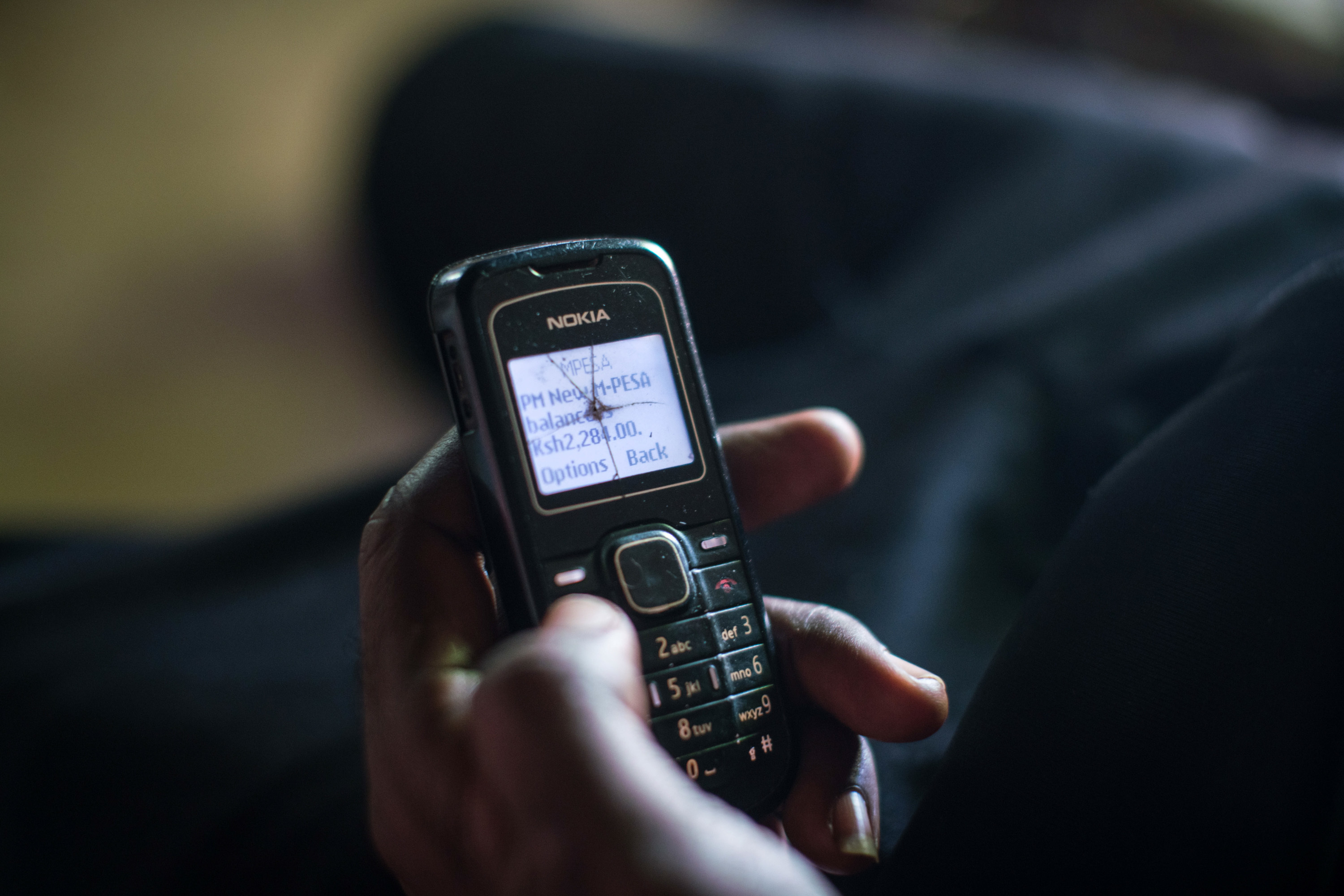
A man checks his phone to confirm that the charity GiveDirectly has transferred a cash grant to his account. (Nichole Sobecki for NPR)

In 2013 Daniel Handel, an economist with USAID—the U.S. government’s main agency for foreign assistance—had just moved to Rwanda when he heard about a charity that was testing a bold idea:

Instead of giving people in poor countries, say, livestock or job training to help improve their standard of living, why not just give them cash and let them decide how best to spend it?

Handel had been mulling this exact question. Aid programs were spending enormous sums per person to boost poor people’s income less than the cost of the program. At this rate, Handel thought, why not just hand over the money to people directly? This program called GiveDirectly was doing just that.

So Handel went to his bosses at USAID’s Rwanda office and proposed an experiment:

Take one of USAID’s typical programs and test it against cash aid. For the comparison, he selected a program to improve child and maternal health in Rwanda by teaching families about nutrition and hygiene.

A pool of families from nearly 250 villages was selected based on typical criteria and randomly assigned to one of four groups.

  • Those in the first were the “control” and received no help.
  • Those in the second group were visited by the nutrition and hygiene education teams.
  • Families in the third group were given small cash grants by GiveDirectly equivalent to the per-person cost of the nutrition and hygiene program, an average of $114.
  • In the final group, families got a much larger cash grant of around $500 – a figure chosen because this was the amount that GiveDirectly estimated was more likely to make an impact.

Following the experiment, the government released the results of the first study in the series.

The experiment found that the program met none of its main objectives. Teaching Rwandans about nutrition did not improve their nutrition or health. Neither did giving Rwandans the cash equivalent of the cost of the education program — about $114.

“Our hearts sank.”

The program’s focus on trying to change behaviors is one of the world’s major strategies for ending malnutrition. And, at least in this example, it had failed to achieve any of its primary goals.

A year on, the children who had been targeted by the nutrition and hygiene program were no more likely to eat a better or more diverse diet, and no less likely to be malnourished or anemic than children who had gotten no help at all. But providing a much larger cash grant of about $500 did make some difference.

Supporters of such “cash-benchmarking” exercises are heralding this particular one as a milestone. For years, anti-poverty advocates and researchers have complained that the U.S. government doesn’t do enough to make sure its aid programs actually work. “But when you talk about giving money to people straight up, with no conditions, people at USAID look at you kind of like you’re a crazy person. There’s ‘an inherent sense’ that they can’t be trusted to spend it wisely.” said Daniel Handel’s associate James Carbonell.

  • In this case, people who were given the cost-equivalent grants used much of the money to pay down their debts.
  • It remains unclear what, if any, material changes USAID is planning to its nutrition efforts based on the study’s findings.
  • At the time of this writing (FEB 2019), USAID remains reluctant to discuss the experiment and did not grant the authors of the NPR story permission to speak directly to Daniel Handel about the results.

Discussion

  1. Did the authors of the study Fail?
  2. Would proving that cash-equivalent grants were as beneficial as the education program have qualified as Success?
  3. Or did the authors succeed by proving that simply handing recipients money without any stipulation was the wrong way to achieve a particular goal?
  4. Could the authors conclude that poor people really DON’T know “what to do with the money”?

Credits

Heavily edited from an original story by NPR.
Copyright 2018 NPR. To see more, visit http://www.npr.org/.

Link to the original:
https://whyy.org/npr_story_post/which-foreign-aid-programs-work-the-u-s-runs-a-test-but-wont-talk-about-it/

Further Reading

The Planet Money story: https://www.npr.org/templates/transcript/transcript.php?storyId=214210692

From Nonprofit Chronicles: https://nonprofitchronicles.com/2018/09/11/why-is-the-us-giving-cash-to-poor-people-in-africa-no-strings-attached-for-good-reason/


Brief Exercise

  1. In the Reply field below, briefly answer any or all of the Discussion Questions, then discuss how you would respond to finding that your “My Hypothesis” proposal cannot be supported by the initial evidence.
    • (Assume in your Reply that you did not wait until the last week of the semester that the evidence did not support your Hypothesis. 🙂
Posted in Lectures | 55 Comments